This excerpt is taken from "Science and Technology Backyard Model: Implications for Sustainable Agriculture in Africa" by Xiaoqiang Jiao et al. Published in Frontiers of Agriculture Science and Engineering, 2020, 7(4): 390?400. https://journal.hep.com.cn/fase/EN/10.15302/J-FASE-2020360
Abstract
Sustainable food production to feed the growing population in Africa remains a major challenge. Africa has 64% of the global arable land but produces less than 10% of its food locally due to its inherently low soil nutrient concentrations. Poor soil fertility and a lack of fertilizer use are the major constraints to increasing crop yields in Africa. On average only about 8. 8 kg NPK fertilizer is applied per hectare by African smallholder farmers. There is therefore considerable potential for increasing food production through sustainable intensi?cation of the cropping systems. The low crop yields in Africa are also partly due to limited farmer access to modern agronomic techniques, including improved crop varieties, a lack of ?nancial resources, and the absence of mechanisms for dissemination of information to small holders. This study analyzed the Science and Technology Backyards (STBs) model and investigated its use for the transformation of agriculture in Africa. Some key lessons for sustainable crop intensi?cation in Africa can be found from analysis of the STB model which is well established in China. These include (1) scientist-farmer engagement to develop adaptive and innovative technology for sustain-able crop production, (2) dissemination of technology by empowering smallholders, especially leading farmers, and (3) the development of an open platform for multiple resource involvement rather than relying on a single mechanism. This review evaluates the bene?ts of the STB model used in China for adoption to increase agricultural productivity in Africa, with a perspective on sustainable crop intensi?cation on the continent.
Operating mode of Science and Technology Backyards in China
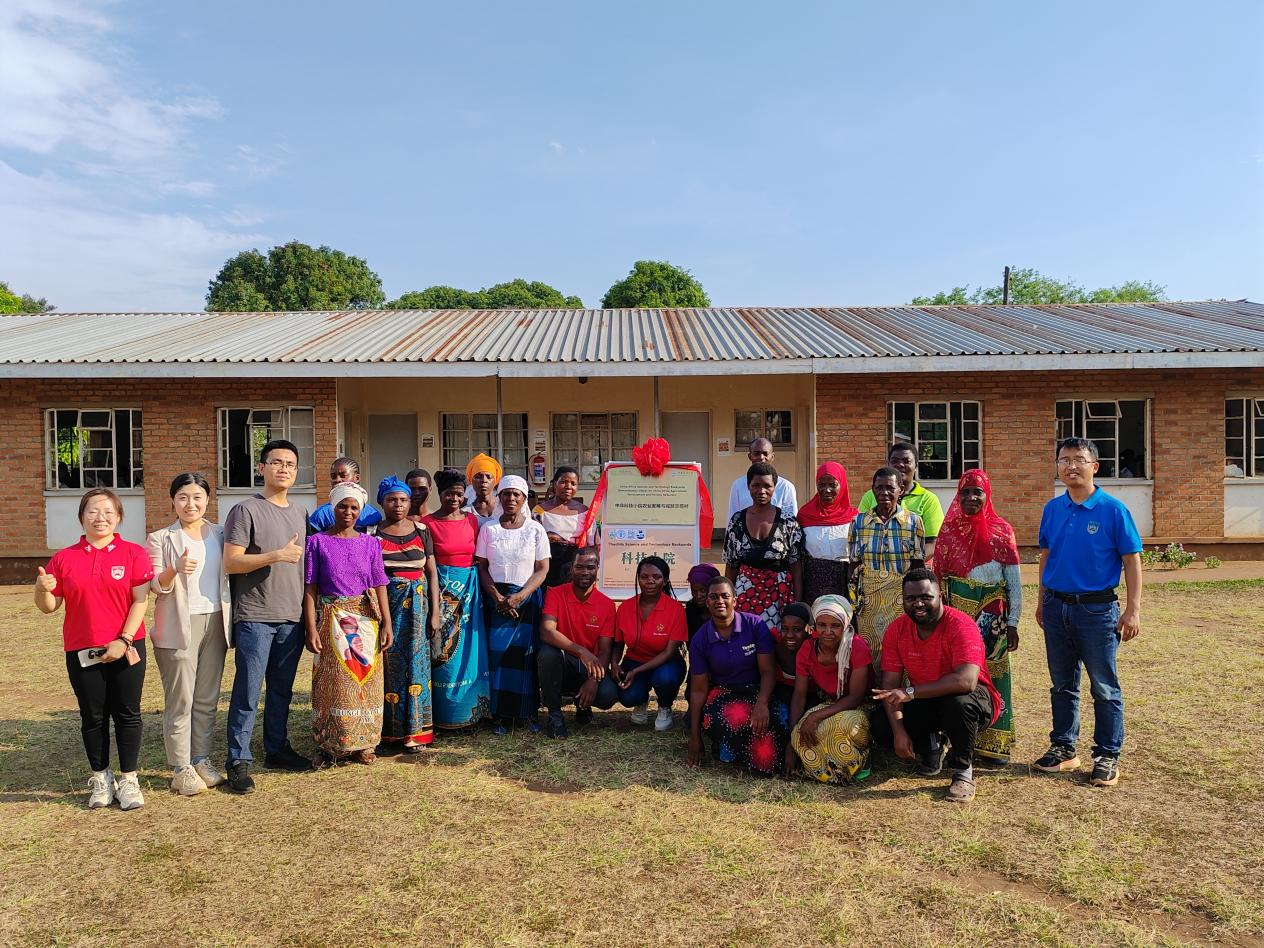
STBs in China represent a novel model that links the farming community and the science community for mutual bene?t in technology development and knowledge dis-semination. With this approach, technology innovation and information exchange are facilitated for sustainable crop production. In STBs, agronomy experts such as professors, graduate students and extension workers, live and work together with smallholders. The concept of sustainable crop production using STBs was envisaged as the engagement of smallholders and scientists from a top-down approach. In this arrangement, when farmers encounter any agronomic problems in the ?eld they can turn to the experts for help without delay, extra cost, or long-distance travel. The co-operatively decided solutions for sustainable crop production are implemented by scientists and smallholders working together. Then technologies are developed to suit local circumstances are disseminated on a larger scale. With this approach, large numbers of smallholders have been empowered with new knowledge and novel technologies for sustainable crop production. The success of the STB model in transforming traditional agronomy practices into sustain-able crop production became apparent in a local county on the North China Plain.
The picture is provided by the project team.
Many factors have contributed to the success of STBs in China. One is the development of adaptive technologies with the full engagement of scientists and farmers in crop production. For example, the excessive use of chemical fertilizer in crop production on the North China Plain was a major factor leading to low N use ef?ciency and high environmental risks. Technologies for high N use ef?ciency in crop production needed to be developed. However, from the perspective of smallholders, high inputs were closely associated with high outputs. There-fore, to persuade smallholders to optimize chemical N use in crop production required setting up ?eld trials to demonstrate enhanced N-use efficiency to the farmers. In a pilot study the scientists measured N ?ow in the root-zone and crop demand dynamically during crop production and developed knowledge of sustainable N use technologies from the principles of plant–soil interactions. For wider use by smallholders, the formulas of compound chemical fertilizers were modi?ed to suit the N availability in the root zone. With this approach, technologies for high N use ef?ciency were widely adopted by smallholders as these were well adapted to local conditions. This was seen as a result of a collective learning process by all actors (including researchers and smallholders) in the process of knowledge exchange.

The picture is provided by the project team.
Knowledge transfer to smallholders is another important factor that has contributed to the success of STBs in China. A key point for knowledge transfer to smallholders is to use the leading farmers or community leaders in a promoter-adopter approach. In the STB model the chief farmers are actively involved in scienti?c research and are thus exposed to intensive knowledge-based technologies including ?eld trials, ?eld demonstrations and technical information available from extension services. Strong participation in the development of adaptive technologies by leading farmers can enhance the relevance of this innovation to speci?c farmers who are more likely to adopt advanced technologies and disseminate them to other farmers. With this approach, a network of leading farmers, their followers and scientists is developed.
In addition, some effective approaches have been employed to disseminate technology at the village level. For example, a ?eld trial with two treatments, 30 farmer families, 50 farmer ?eld plots and a 7-ha demonstration ?eld was used. With this approach, major factors limiting crop production were identi?ed by farmer survey and some adaptive technologies were developed with the engagement of scientists and farmers, and visible bene?ts of these agronomic practices were presented in ?eld demonstration trials, with the leading farmers being directly involved in the whole process, and hence, exposed to these advanced technologies. Through intensive communication between smallholders, STB staff and researchers, highly relevant farm-speci?c solutions have been developed through a combination of farmer experience and scienti?c knowledge. The adaptive nature of this approach was a key element for co-operative learning and the generation of promising novel solutions. The role of leading farmers is essential for the creation of technological innovation and knowledge transfer on a larger scale.

The picture is provided by the project team.
Furthermore, this approach has been shown to result in much greater cost-effectiveness when compared to the previous extension practices which were top-down. The new STB model has tended to encourage and facilitate learning by smallholders, researchers and extension workers, and offers a more effective alternative to the current linear and unidirectional knowledge transfer process. In addition, the role of researchers and extension workers in the STBs model has changed from knowledge transfer to problem solving. To develop adaptive technologies and promote adoption at a larger scale, researchers must continually acquire new knowledge in order to improve their interdisciplinary skills. Under the STB model the fragmented knowledge transfer systems have been integrated into a combined force to achieve technological innovation and knowledge transfer through the involvement of government, enterprises and knowledge hubs.
Implications of Science and Technology Backyards for sustainable intensi?cation of agriculture in Africa
We must depend on smallholders to transform African agriculture toward sustainable intensi?cation fundamentally. The lessons from China’s experience show that the resource-environment costs of food production are very large with land expansion and overuse of chemical fertilizers. The effective approach to move agriculture toward sustainable intensi?cation in Africa is to increase grain yield per unit land area rather than expansion of agricultural land. Empowering smallholders to increase grain yields in Africa is the only way to increase food production and achieve food self-suf?ciency on the continent.

The picture is provided by the project team.
1. Scientist-farmer engagement to develop adaptive and innovative technology for sustainable crop production
Placing the empowerment of smallholders as a top priority has proved to be a major factor in the successful implementation of STBs in China. One effective approach is scientist-farmer engagement in developing potential solutions for sustainable crop production. From the strong interaction between smallholders and scientists, the partners can more easily identify the agronomic problems in crop production through intensive interview and ?eld observations as a ?rst step for the scientist to come up with a scienti?c solution. Potential solutions supported by the principles of sustain-able crop production have increased smallholder enthusiasm and engagement in research when presented by scientists. The interaction that has ensued between scientists and smallholders has often stimulated small-holder innovation. That way, the requirements of small-holders and scientists are clearly mapped out with smallholders being mainly interested in simple and labor-saving technology and high economic bene?t, while scientists are interested in maximizing crop yields and economic bene?ts with limited environment impact by increasing nutrient use ef?ciency. At the end, these potential solutions have been integrated to meet the requirements of smallholders and the co-operatively decided solutions have been developed by compromising the demands of both scientists and smallholders. Through intensive dialog with smallholders, scientists have built progressive partnerships with smallholders and gained their trust.

The picture is provided by the project team.
With this partnership and trust, scientists have been able to discuss problems or goals with smallholders in a genuine manner, with smallholders also concurrently engaging in scienti?c research and contributing to the development of adaptive technologies. Field trials on sustainable crop production have been conducted in smallholder ?elds to improve knowledge contextualization. For example, in order to test the optimum chemical Nuse for high-yield crop production, two treatments, optimum and farming practice N use have been compared in several STB farmer ?eld plots. All the ?eld operations have been conducted by smallholders while scientists have provided them with technical support and have trained them on the key crop growth stages. Some systematic ?eld trials have also been conducted by smallholders and scientists using this approach. Based on the results of systematic ?eld trials, a set of ?eld guidelines has been developed. Through scientist-farmer engagement in setting up the ?eld trials, recognition of the scienti?c views has been extended beyond the academic community, and with understanding of the views of smallholders participating in scienti?c research, the knowledge-action boundary has started to break down, leading to an increase in smallholder innovation. With this approach, technologies and practices have been adapted by smallholders to suite highly localized conditions.

The picture is provided by the project team.
A large number of studies have been conducted on technological innovation for smallholders. For example, crowdsourcing data were used to conduct meta-analysis for evaluating the impact of single agronomic practices on crop production and proposed the potential of the approach for smallholders, but its routine application was not very effective. The ineffectiveness of this approach was due to lack of participation by smallholders. Crop systems are highly heterogeneous in terms of soil type, planting pattern and resource endowment, which implies the need for adaptive technologies suited to the context of the crop system. Unfortunately, scientists frequently produced the knowledge with formal logic and assumed that smallholders would apply it automatically. In such cases, they do not know the end use of the knowledge created and who are the speci?c end-users and how to make it more practical for decision-makers. Smallholders are mostly concerned about the cost-effectiveness and ease-of-use of agronomic practices. Furthermore, scientists tend to produce generic recommendations that bypass established decision-making processes, which often results in poor understanding of the science outside the academic community and low interest from smallholders in scienti?c research. Knowledge of localized best-practices for farmers with varying resource constraints is one of the primary constraints limiting the adaptation rate of recommended technologies. Therefore, participatory research and scientist-farmer engagement are effective approaches to generate demand-driven knowledge, and this is a key element for STB implementation. In STBs the role of scientists in the STB is beyond their normal roles as mere knowledge creators in research and academic institutions and is extended to mutual learning and understanding and systematic integration. With this approach, scientists and farmers have co-created knowledge to solve agronomic problems through collaborative actions.
2. Dissemination of technology by empowering smallholders, especially leading farmers
Transfer of knowledge to stimulate smallholder action is a key step in empowering smallholders to achieve sustain-able intensi?cation on a larger scale. A large number of models have been used to disseminate knowledge to smallholders. However, the impact of these pilot works continues to be debated. Knowledge transfer is more complex than technology generation, covering a range of stakeholders such as government, scientists and policymakers. Therefore, to empower smallholders would require a close working relationship among all stakeholders. In STBs, outreach tools from the bottom-up approach were employed to disseminate improved technologies. Thus, the starting principle of all the tools is to build smallholder capacity using a farmer-centered approach. For example, ?eld trials and ?eld demonstrations are conducted by scientist and smallholders working together. This can provide a clear demonstration of the technologies, and the key operators are trained, especially in recognition of key crop growth stages. In addition, farmer ?eld days are held regularly to share and disseminate these agronomic practices.

The picture is provided by the project team.
Most importantly, farmer-to-farmer knowledge transfer in the STB model has been employed to achieve adoption of technologies on a larger scale. With this approach, leading farmers are given a high pro?le, and they become key players in knowledge transfer in rural areas. The leading farmers in each village are volunteers with a strong desire to adopt the technologies and are intensively trained in the STBs in order to enhance their knowledge of recommended technologies. They also obtain knowledge through their involvement in ?eld trials and demonstrations. Compared to the FFS, the leading farmers can explain and understand clearly the technology and train their neighbors. In fact, understanding and adopting the technologies in their own ?eld is very important for leading farmers as it was shown that leading farmers were most likely to recommend their own adoptions and experience of technologies to their other farmers. With this village-level nexus, a cycle was developed that increased the number of farmers getting involved in the research and promoting technology dissemination at a larger scale. Through the network of leading and other farmers, the clear effects in ?eld demonstration and trials increases the understanding of more farmers.
3. Development of an open platform for attracting multiple resources involvement
In addition to a bottom-up approach, a top-down approach was employed by STBs to link grass root initiatives with government extension system and the supply chain. To effectively conduct knowledge transfer, resources from government, and enterprise were integrated into the STB model. STBs become an open platform to attract multiple resource involvement. Governments are responsible for releasing policies and regulations that support and promote technological innovation. For example, in order to stimulate smallholder enthusiasm for farming, subsidies covering fertilizer, machinery and other inputs are provided. They are uniquely positioned to promote farmer education that can help change attitudes and promote the adoption of new technologies. Concurrently, policies to encourage smallholders to adopt sustainable agronomic practices are also developed by governments. However, the governments have limited capacity to develop technological innovation, hence the need for a platform to integrate resources. When resources from government and STB are integrated together, STBs develop adaptive technologies that verify these at a local scale and disseminate on a large scale through the power of government. The dissemination of technologies has been achieved by a systematic process of characterizing, diagnosing, redesigning, implementing, broadening adoption and evaluations, as well as involving governments, enterprises, and knowledge hubs.
The STBs generally provide the fertilizer business with product development opportunities and these companies create improved chemical fertilizers based on formulas evaluated in the STBs and increase market share and increase sales pro?ts. Thus, new partnerships have been developed which accelerate technology transfer and empower smallholders. By collaboration with business, the recommended new technologies have been rapidly integrated into products and technical manuals. For example, in order to persuade smallholders to avoid overuse of chemical fertilizer in crop production, various chemical fertilizer formulations were developed by collaboration with fertilizer companies. Through this approach, optimum chemical fertilizer uses to reduce environmental risk has been expanded to a much larger scale. Through cooperation with business, both adaptive technologies and products are more readily accepted by smallholders.
In Africa the effective implementation of the STB model needs to integrate resources from local government business and knowledge hubs. For example, the cost of chemical fertilizers is 3–5 times higher than in China and i beyond the capacity of smallholders to afford. Repack-aged chemical fertilizers in small quantities should be standardized and encouraged by local government. Subsidies reducing chemical fertilizer costs should be provided to smallholders. Furthermore, soil quality surveys should be conducted throughout the county. Taxes should be imposed on owners of poor soil fertility land due to land degradation. The combination of command-and-control and an incentive-based policy should be implemented at the same time to increase food production in Africa. In summary, creating an open platform for adaptive innovation technologies for dissemination of technology empowering smallholders and attracting more resources from the wider community are the key to the success of STBs in China.
Conclusions
Africa produces less than 10% of its food from 64% of the global arable land area while China produces 22% of food with less than 9% of the global arable land area. This indicates great potential for Africa to improve its food security and self-suf?ciency and to become a food exporter. From the analysis of some pilot efforts for the transformation of agriculture in Africa (e. g., mother-baby trials) we found that low access to agronomic information by smallholders and the lack of knowledge dissemination mechanisms are major limiting factors. STBs developed in China provide some key opportunities for sustainable agricultural intensi?cation in Africa. These include (1) scientist-farmer engagement to develop adaptive and innovative technology for sustainable crop production; (2) dissemination of technology by effectively empowering smallholders; and (3) development of an open platform for attracting multiple resource involvement, rather than relying on a single mechanism. This paper provides a perspective on sustainable agricultural development in Africa and the potential bene?ts of transferring the STB model to Africa.
Category
Case Study
Contributor
Science and Technology Backyard Model: Implications for Sustainable Agriculture in Africa
Country
Case Study