Paddy for Prosperity:Creating a New Chapter for Sustainable Development of
China-Africa Rice Value Chain Cooperation

Introduction
The 5th China-Africa Rice Value Chain Seminar was convened in Guangzhou, China, from 18–19 June 2025. Building on more than five years of collaboration, the seminar gathered 150 policymakers, researchers and industry leaders from ten African countries. Co-organized by the United Nations World Food Programme Centre of Excellence for Rural Transformation (WFP China COE), the United Nations Office for South-South Cooperation (UNOSSC), the Alliance for a Green Revolution in Africa (AGRA), and China’s Department of International Cooperation of the National Food and Strategic Reserves Administration (NAFRA), and supported by the China International Center for Economic and Technical Exchanges (CICETE) and the Department of International Cooperation of Ministry of Agriculture and Rural Affairs of China (MARA), the seminar provided a platform to share knowledge, review progress, and map out future directions for China-Africa rice value chain cooperation.
With Africa facing persistent food security challenges—ranging from climate shocks to high import dependency and post-harvest losses—the seminar emphasized technology transfer, policy innovation, and inclusive partnerships as critical drivers of transformation.
The seminar was structured over three days: a preliminary session on 17 June 2025, the main seminar on 18 June 2025, and a high-level roundtable and technical field visit on 19 June 2025.
Day 1 – 17 June 2025
Preliminary Session: Beyond Rice – China-Africa Agricultural Value Chain Cooperation
Held as a preliminary session, Beyond Rice expanded the dialogue to on China-Africa agricultural value chain collaboration beyond rice. Chaired by WFP China, the session explored innovative pathways for sustainable food systems, focusing on maize, cassava, agricultural mechanization, and climate-resilient rice.
Prof. Fan Xingming of Yunnan Academy of Agricultural Sciences presented China’s breakthroughs in developing biofortified maize varieties enriched with vitamin A, protein, and drought tolerance. Collaborative trials with African research institutions demonstrated their potential to address yield gaps and malnutrition challenges across the continent. Dr. Zhang Zhenwen of the Chinese Academy of Tropical Agricultural Sciences (CATAS) demonstrated how simple, affordable processing equipment can convert cassava into high-value products, such as flour, starch, and even beer, while offering a replicable model for African smallholders to increase incomes and reduce post-harvest losses. Prof. Chen Shuren from Jiangsu University showcased affordable small-scale mechanization for smallholders in China, capable of boosting productivity by up to 60% and successfully adapted to hilly terrains comparable to those in Africa. Prof. Luo Lijun of South China Agricultural University introduced water-efficient and drought-resistant rice varieties that sustain high yields while using 30–40% less water, providing practical solutions for water-scarce regions in Africa.
Open discussions reinforced the importance of localized adaptation. Prof. Felix Dakora of South Africa called for joint demonstration farms across agro-ecological zones to link Chinese innovation with African extension services. H.E. Ambassador Kenneth Sentle Rabale of Lesotho underscored technology accessibility, urging context-specific approaches. Participants agreed that bridging Chinese research with African realities through localized delivery models and collaborative platforms is essential to scaling impact.
Day 2 – 18 June 2025
Opening Session – Charting a Shared Vision
The seminar was officially opened on 18 June. At the opening session, representatives from the WFP, Chinese government, African countries, international organizations, and academic institutions delivered remarks highlighting shared priorities for food security, sustainable agriculture, and strengthened China-Africa cooperation.
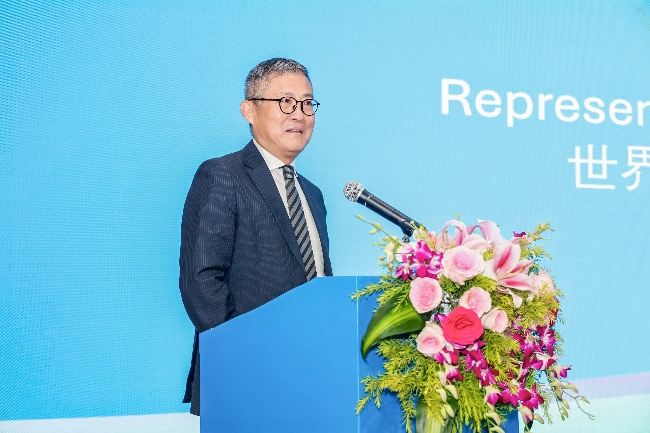
Zhao Bing, Representative/Director of WFP China, emphasized the importance of technology transfer and knowledge sharing in addressing climate vulnerability and economic shocks. He highlighted China’s commitment to rural revitalization as a model for partnership and underscored the urgency of reducing Africa’s reliance on rice imports through scalable and sustainable solutions.

Zhang Yan, Deputy Director, Acting Director-General, Department of International Cooperation, NAFRA, underlined the complementary strengths of Africa’s agricultural potential and China’s expertise in rice breeding, production, storage, processing, and market regulation. She positioned the partnership as a model of mutual benefit in advancing global food security.

Dong Moli, Division Chief, Department of International Cooperation, MARA, emphasized the importance of inclusive partnerships for sustainable outcomes. She highlighted China’s 24 agricultural demonstration centres across Africa as “living laboratories,” illustrating the transition from technology provider to co-innovator. Sustainable success, she noted, requires supportive policy frameworks that incentivize localization.

Wang Xiaojun, Trust Fund Director, UNOSSC, underscored the catalytic role of technological innovation in South-South Cooperation. She highlighted Africa’s severe post-harvest loss challenge, with 30% of yields wasted before reaching markets. She called for innovative blended financing to accelerate technology adoption, stressing that technological equity is as vital as efficiency.

H.E. Ambassador Kenneth Sentle Rabale of Lesotho framed food security as foundational to peace and stability. He urged localized adaptation of technologies, emphasizing that cooperation must be anchored in both technical and ethical considerations. He positioned China-Africa cooperations as critical for global resilience.
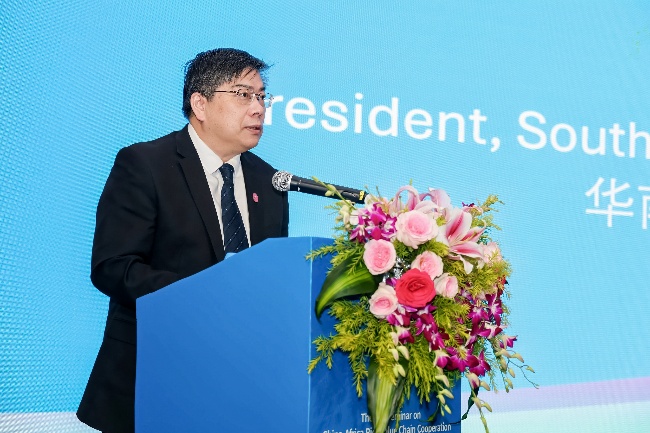
Xue Hongwei, President of South China Agricultural University, showcased successful China-Africa partnerships, particularly the development of the WDR73 rice variety. He outlined a three-pillar collaboration strategy: (1) technological co-innovation through joint research, (2) vocational training for human capital development, and (3) value-chain integration from production to market.
Together, these perspectives underscored the seminar’s role as a platform for transforming shared challenges into opportunities for collaborative innovation and sustainable action.
Keynote Session – Insights for Africa’s Rice Transformation
In the keynote session, leading experts from China and Africa shared perspectives on the systemic challenges and opportunities in agricultural development. Their interventions addressed global food security risks, Africa’s structural constraints, and the role of technological innovation and localized research in driving sustainable transformation.
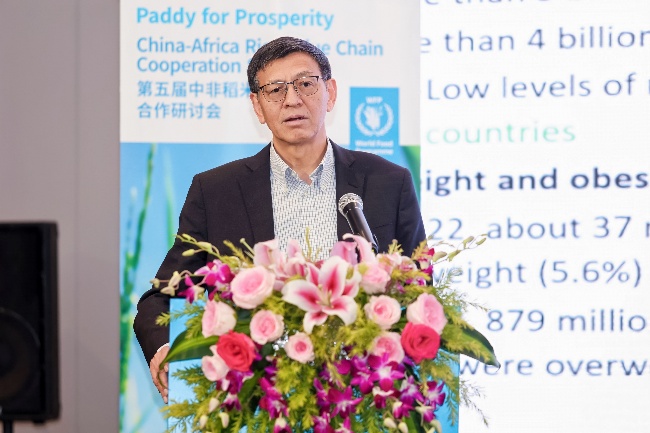
Prof. Fan Shenggen, Dean of the Academy of Global Food Economics and Policy, China Agricultural University, outlined three interlinked crises facing global food systems: acute hunger, micronutrient deficiencies, and obesity, challenges that disproportionately affecting Africa. He pointed to Africa’s high rice import dependence, wide yield gaps, and climate pressures. Prof. Fan proposed China-Africa collaboration focused on: (1) strengthening policy dialogue and joint research; (2) accelerating technology sharing and localization via training and capacity building; (3) expanding China’s support for agricultural infrastructure; (4) promoting institutional innovations to align research, policy, and markets. He called for cooperative models that address yield deficits, reduce emissions, and tackle post-harvest losses, while embedding investment in Africa’s agri-food transformation.
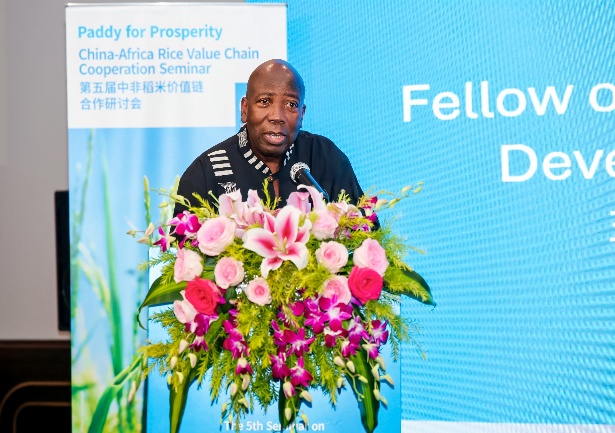
Prof. Felix Dakora, Fellow of the African Academy of Sciences, traced Africa’s agricultural journey from indigenous rice cultivation to modern challenges of dependency on imports. He highlighted the legacy of the West African Rice Development Association (WARDA), as a testament to African commitment to research and development. Dakora identified structural challenges including weak infrastructure, low mechanization, and policy missteps. He contrasted these with China’s success in investing over 1% of GDP in agricultural R&D, leading to transformative breakthroughs such as hybrid rice. He argued that localized research partnerships and infrastructure investments are vital to closing Africa’s productivity gap.

Prof. Xie Huaan, Fellow of Chinese Academy of Sciences and the pioneer of super hybrid rice and ratoon rice, advocated adaptive transfer of innovations such as water-smart and ratoon rice varieties, tailored to thrive in Africa’s drought-prone and degraded soils. Prof. Xie emphasized co-creation over one-way technology transfer and called for integrated training programs that equip farmers with localized solutions. He also urges policymakers to prioritize investments in research and development to sustain agricultural transformation.
Together, their insights highlighted the urgency of reducing Africa’s reliance on rice imports, closing yield gaps, and adapting innovations to local conditions. They underscored that sustained investment in research, infrastructure, and capacity building is essential to unlock Africa’s agricultural potential and advance global food security.
Policy Dialogue – Policy Environment, Investment Opportunities, and Support Measures
The afternoon session on 18 June on Policy Dialogue delved into actionable strategies to strengthen China-Africa rice value chain cooperation, emphasizing the need for political will, investment, and inclusive development.
Panel 1: Policy Alignment for Impact: Unlocking Opportunities in China-Africa Agricultural Value Chain
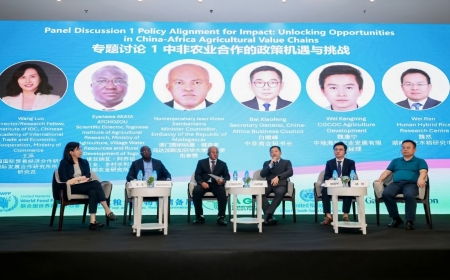
The panel discussed integrated strategies to accelerate the transformation of Africa’s rice sector, with experts highlighting the need for coordinated action across policy, technology, and partnerships and proposing actionable solutions to unlock productivity, resilience, and self-sufficiency in the region.
Eyanawa Akata Atchozou of the Togolese Institute of Agricultural Research called for harmonized policies and regional coordination to address fragmented agricultural ecosystems and low mechanization in Africa’s rice sector. Nomenjanahary Jean Victor Sambaniaina from the Embassy of Madagascar presented Madagascar’s successful experience with hybrid rice adoption as a model for Africa, while highlighting the need for climate-smart infrastructure to tackle water scarcity and post-harvest losses. Bai Xiaofeng of the China-Africa Business Council stressed blended financing models and stronger private-sector engagement as critical to scaling mechanization and processing technologies across Africa’s rice value chain. Wei Kangning of CGCOC Agriculture Development showcased Chinese innovations in mechanization and irrigation as transformative tools to empower smallholder farmers and enhance productivity in Africa. Wei Ran of the Hunan Hybrid Rice Research Center introduced AI-driven precision farming as a breakthrough to close Africa’s rice productivity gap and significantly boost yields.
The panel concluded that sustainable growth in Africa’s rice sector requires synchronized efforts: harmonizing policies, localizing technologies, and fostering cross-border collaborations to achieve self-sufficiency and economic resilience.
Panel 2: Bridging the Investment Gap: Scalable Solutions for Africa Rice Value Chain
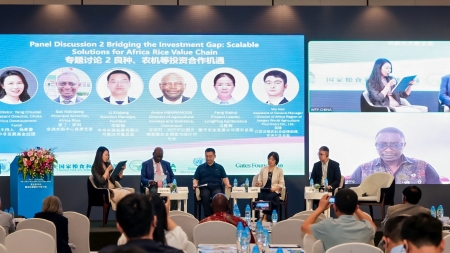
The panel explored practical strategies to mobilize resources and innovations for Africa’s rice sector. Speakers emphasized the need to address financing bottlenecks through a combination of technological, policy, and institutional solutions.
Sali Ndindeng of AfricaRice underscored the importance of integrated mechanization and digital tools to reduce post-harvest losses and overcome fragmented rice value chains. Li Xingang from FamSun introduced solar-powered irrigation and energy-efficient processing technologies designed to lower production costs and enhance smallholder resilience. Andre Mbairanodji of Cameroon’s Agricultural Statistics stressed data-driven policymaking and public–private partnerships as critical to attracting sustainable investments. Feng Xiahui of LongPing AgriScience highlighted hybrid rice seeds and climate-smart technologies as scalable solutions to increase yields and reduce import dependency. Wu Han from Jiangsu World Agriculture Machinery emphasized the value of localizing Chinese agricultural machinery and establishing training programs to foster wider mechanization adoption in Africa.
The panel concluded that bridging investment gaps in Africa’s rice sector requires more than funding inputs—it demands coordinated innovations, inclusive partnerships, and context -specific solutions to accelerate the transformation of Africa’s rice sector and contribute to resilient and sustainable agri-food systems across the continent.
Panel 3: Empowering Smallholders: Policy Innovations to Strengthen Productivity and Resilience in Rice Value Chains
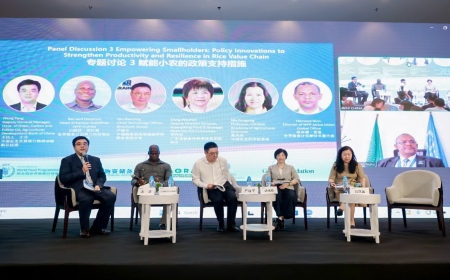
The panel focused on empowering smallholder rice farmers through targeted policy innovations, highlighting the role of supportive regulations, investments, and institutional mechanisms in enhancing productivity, resilience, and market integration.
Bernard Delamou from WFP Guinea Country Office emphasized localized policy support, such as mini-silos and processing hubs, to reduce post-harvest losses and strengthen smallholders’ capacities in Guinea. Yan Xiaoping of SinoGrain Group highlighted China-Africa grain storage and logistics partnerships as a means to stabilize markets and improve smallholders’ access to value chains. Deng Weizhen from Guangdong Food & Strategic Reserves Administration underscored government-led reserve systems and price stabilization mechanisms to safeguard smallholder incomes and ensure food security. Nie Fengying of the Chinese Academy of Agricultural Sciences advocated for policy-driven R&D investments in climate-resilient rice varieties and tailored extension services. Hameed Nuru from the WFP Africa Union Office called for continental policy harmonization under AU frameworks to better integrate smallholders into structured markets and attract scalable investments.
The panel concluded that empowering smallholders requires a combination of localized support, market-stabilizing partnerships, targeted research and extension services, and aligned continental policies to integrate farmers into structured markets and mobilize scalable investments.
Day 3 – 19 June 2025
Roundtable Discussion – New Opportunities and Challenges for China-Africa Rice Value Chain Cooperation

On 19 June, a high-level roundtable brought together African delegates, Chinese agribusinesses, financial institutions, and academics to discuss opportunities and challenges in scaling rice value chains across Africa. Key themes included technology transfer, post-harvest management, and crop diversification.
Delegates from C?te d’Ivoire, Guinea, Cameroon, and Togo emphasized common bottlenecks, including low yields, inadequate storage leading to 30% post-harvest losses, limited mechanization, and the need for improved seed varieties, enhanced agricultural inputs, better water management and expanded silo infrastructure. Chinese agribusinesses presented scalable solutions, such as Hubei Lianfeng’s contract farming model in Mozambique, which integrates localized seed adaptation, farmer training, and processing facilities to increase yields to 5-7 tons per hectare, and Longping High-Tech’s hybrid rice adaptation in Gambia, combining climate-adapted varieties, farmer training, and partnerships with local governments, achieving yields of up to 10.8 tons per hectare. Financial institutions—including Attijariwafa Bank, the Silk Road Fund, and the China-Africa Development Fund—pledged investments in smallholder financing, irrigation, and storage infrastructure. Research and policy actors, such as Nanjing University of Finance and South China Agricultural University, stressed Sino-African collaboration on rice standards, storage technologies, drought-resistant crops, and alignment with Africa’s Agenda 2063.
Closing Session – Turning Dialogue into Action
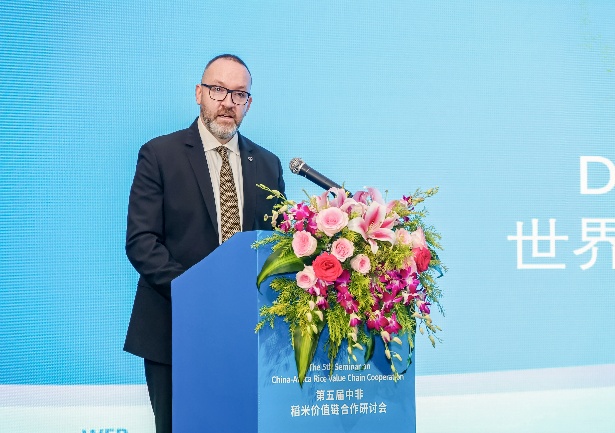
The seminar concluded with a call to translate discussions into prioritized concrete, bankable projects. Mr. Simon Clements, Deputy Director of WFP China, emphasized the importance of turning collective expertise into actionable outcomes. Ms. Li Shuyin, Deputy Director General of the China International Center for Economic and Technical Exchanges highlighted the progress achieved through five years of collaboration, while Armando Pereira, President of the National Institute for Agricultural Research of Guinea-Bissau, stressed the need for sustained policy measures to strengthen rice value chains. The closing session reaffirmed the commitment to advancing China–Africa cooperation and supporting the resilience of rice systems across the continent.
Field Visit

Following the seminar, a technical field visit was organized to showcase China’s advanced rice industry, including modern rice processing lines and storage facilities. Participants gained firsthand exposure to scalable technologies and infrastructure with the potential to strengthen Africa’s rice value chain, reinforcing the seminar’s objective of advancing sustainable China-Africa agricultural cooperation.
Conclusion
The 5th China-Africa Rice Value Chain Seminar underscored the importance of South-South and triangular cooperation in addressing Africa’s food security challenges. Across plenaries, panels, and roundtables, participants charted a path from shared vision to actionable commitments, emphasizing technology co-innovation, policy alignment, smallholder empowerment, and investment-driven partnerships.
By bridging Chinese innovations with African priorities and coupling them with inclusive financing and farmer-centred approaches, the seminar laid the ground for more resilient and sustainable rice systems. The outcomes represent a significant step forward in China-Africa agricultural cooperation but and contribute directly to the achievement of the global goal of Zero Hunger.